Wednesday, January 28, 2009

Politics As Usual on Steroids

"The question we ask today is not whether our government is too big or too small, but whether it works, whether it helps families find jobs at a decent wage, care they can afford, a retirement that is dignified.

Where the answer is yes, we intend to move forward. Where the answer is no, programs will end.

And those of us who manage the public's dollars will be held to account, to spend wisely, reform bad habits, and do our business in the light of day, because only then can we restore the vital trust between a people and their government."

~Barack Obama, Inaugural Address, Jan. 2009

The above statement, far from being an argument to expand the government, is an argument to turn Washington, D.C. into a ghost town.  If there is one thing we know after almost eighty years of government spending on well-meaning but paternal programs it is that, aside from being entirely unconstitutional, they do not bring about their stated ends.  Thus Obama should, by his own rhetoric,  once and for all put the alphabet soup of federal agencies to rest.  That would be change that every thinking person could believe in.  Instead we are on the cusp four of years of politics as usual--except now we face a president with tremendous political capital.  This will result in not just politics as usual, but politics as usual on steroids.

Nothing so far proposed or done by the new Obama administration is worthy of being called change.  The stimulus to be voted on today is a variety of the ripest political scam imaginable.  In the name of blindly "doing something", Congress is going to vote on a nearly one trillion dollar stimulus package.  The process has been far from transparent; there have been exactly zero committee hearings on the bill.  Its contents have been determined outside the deliberative process of Congress, just like the recent $800 billion TARP bailout under Bush.  Further, the bill has has been designed with little attempt to determine (if this is even possible) if the money is being spent wisely.  The stimulus bill contains money for the arts, Amtrak, and a host of other politically-favored rat holes.  

"I would love to not have to spend this money," Obama is reported to have said.  What a sad joke.  There is no sound economic or historical reason to spend this money.  The stimulus bill is a simple act of desperation--a "hail Mary" pass.  The Fed has done virtually all it can do to attempt to re-inflate the economy with monetary policy, to no avail.  Now politicians are vainly resurrecting fiscal stimulus.  It will not work; it cannot work.  

Unless we consider putting politics as usual on steriods to be change, we are in for four years of the same old same old.

Monday, January 26, 2009

Bow Tie Extra: Cardinals in the Super Bowl?

"The Arizona Cardinals are going to the Super Bowl." If anyone here in the Valley of the Sun had just awoken, ala Rip van Winkle, from a ten year nap, he would not believe this statement. In 1999, the Cardinals had been in Arizona for eleven years and one thing was obvious--the Cardinals would never be the kind of team that would go to the Super Bowl as long the Bidwill family was in control. Now a short history.

The Cardinals are the oldest continuously run professional football franchise dating back to 1898 in Chicago. The name "Cardinals" comes from the faded maroon of the jerseys bought used from the University of Chicago team. The Bidwill family gained control of the Cardinals in 1932 during the Depression. As the Chicago Cardinals the team was modestly successful, fielding an exciting championship team in 1947. The Bidwill family made some St. Louis connections by marriage and moved the Cardinals to St. Louis in 1960.

The only truly successful period for the franchise in St. Louis came in the mid-1970s. This team was loaded with talent--Jim Hart, Terry Metcalf, Mel Gray, Roger Wehrli, Dan Dierdorf, Jim Otis, etc. Since I was a young football fan at the time, I am among the relative few who did not grow up thinking of the Cardinals as a doormat. Monday Night Football halftime highlights might, this was before the days over ESPN-induced supersaturation, feature Howard Cosell saying something like, "But back come the Cardiac Cards. On third and twenty Jim Hart throws deep down the sideline to the speedster, Mel Gray, and he could go all the way. Touchdown Cardinals." These Don Coryell-coached teams underacheived in the playoffs, never reaching even the NFC title game.

By the late 1980s, Owner Bill Bidwill, a fellow bow tie wearing penny pincher, had decided that St. Louis would never build a new stadium for the Cardinals. Phoenix offered a new stadium if Bidwill would move the Cardinals to Arizona. The Phoenix Cardinals played their home games in Arizona State's Sun Devil Stadium, with its hot metal bench seating, while waiting for their new stadium to be built. However the team never had the support to make politicians fund a new stadium. Wrangles over where the stadium would actually be located further complicated matters.

In the meantime, the Cardinals languished as a losing team with poor attendance whose owner refused to spend the money to make a winner. Home games often featured more fans from the visiting team than Cardinal fans and were almost always blacked-out on local TV per NFL attendance policy. Being a Cardinal fan was a seen by many locals as, if not a symptom of some mental disorder, worthy of ridicule . Die hard fans did exist and they spent much of their time griping about how the Cards could not win as long as the Bidwills owned the team. Some critics claimed that Bill Bidwill was purposely not building a winning team until he had his new stadium; he survived on revenue sharing from the NFL, not on attendance revenue. Players considered the Cardinals a team with an insurmountable losing culture and a professional dead end. The legendary fourth quarter collapse against the Chicago Bears two seasons ago was another "here we go again" moment and a monument to the futility of the Cardinal franchise.

After years of controversy, the new stadium was finally built in Glendale, in the west valley far from Tempe and Sun Devil Stadium. Arizona voters had to approve a huge bond issue to fund the stadium. The way this was done was illegal, as I understand the law. The east valley voters were led to believe that the stadium might be built in the east valley while west valley voters were given the same hope for the west valley. By law the location of the stadium should have been settled before the vote. It was not settled so as to avoid the disapproval of the voters where the stadium would not be built. As it was, the bond issue still barely passed. The Cardinals now have a truly modern stadium that gives them what cynical valley residents never believed possible for the Cardinals, a true home field advantage.

While I have not been a fan of owners' blackmailing of municipalities to get new stadiums built on the public dime, the football fan, like the investor and entrepreneur, must take the world as it is, not as it should be. I adopted the Cardinals when I moved to Arizona in 1996, warts and all. One of their newest warts is their uniforms; except for the white helmet and black shoes, they are a sartorial nightmare.

I am excited about the Cardinals' appearance in the Super Bowl. The Cardinals have possibly the smallest fan base of any team in the NFL. They will face a team with one of the largest fan bases, the Pittsburgh Steelers. The Steelers became established in the 1970s, along with Dallas Cowboys, as one of the NFL's great bandwagon teams with a national, not just regional, following. Rooting for the Cardinals, on the other hand, has been a contrarian play even here in Arizona. It would be great if the Cardinals' improbable bull run could include running the mighty Steelers bandwagon into a ditch.


Saturday, January 24, 2009

Why Fiscal Stimulus?

Obama's fiscal stimulus plan is the culmination of a return, by desperate politicians, to an idea that recently had been out of fashion. For the last twenty five years or so, manipulating the economy was strictly the dominion of central bankers using monetary policy. We would be treated to wonderful commentary on whether the economy was "overheated" and in need of higher interest rates to cool it off or "cooling" and in need of lower interest rates to heat it up. A balanced budget was the ideal; the Democrats never really achieved one, but they came close at the end of Bill Clinton's term. We then actually went through a period of projecting budget surpluses for the foreseeable future. So much for the idea of foreseeability.

Perhaps the renewed belief in the efficacy of fiscal policy to stimulate the economy is related to the new lack of confidence in the Fed's ability to fine tune the economy with monetary policy. Former Fed chief Alan Greenspan, once the "Maestro", is now discredited; the econometric modeling that failed him so profoundly has not yet, unfortunately, met the same fate. Ben Bernanke has not restored confidence in Fed competence. Also, interest rates are already at rock-bottom levels; they cannot get much more stimulating. Counter-cyclical fiscal policy, i.e. budgetary deficits to heat up the economy during economic slowdowns and budgetary surpluses to cool down the economy during a period of overheating actually fell out of favor for some very good reasons that have relevance to our current malaise.

Fiscal policy comes from the Congress, which makes it notoriously slow to be enacted. Add that to the fact that the economic statistics used to determine whether the economy to needs a heavier foot on the gas or a foot on the brakes lag behind actual events and it is easy to see why fiscal policy had fallen out of favor. Official statistics have finally told us we are a year into a recession. We are now being told that we will not see any stimulus bill pass Congress until February. The main rationale for the bill is our need for "investment" in infrastructure. Those big projects may not take off for almost a year. Lack of timeliness is a big problem with using fiscal policy to counter economic cycles.

Fiscal policy has other problems that will not here be detailed. Foremost, in my mind, is that even if fiscal stimulus could be brought to bear in a timely fashion, it would still fail. Remember when we rushed to get a $165 billion stimulus bill under Bush? Then recently we just had to authorize $800 billion willy-nilly or the sky would fall. The sky is falling anyways. We would be wise to have our doubts about the next round of stimulus.

The simple fact is that government is incapable creating real wealth. Huge government deficits only guarantee one thing--wealth destruction through distortion of the capital structure. Idle assets will not be put to productive use. True wealth production will, on the margins, be sidetracked in pursuit of short-term, unsustainable gains from government largess. So what is the proper policy, both fiscal and monetary? Spending by Congress should be cut to a minimum and the Fed should do nothing. We need a revival of good old fashioned unfettered capitalism.

Friday, January 23, 2009

The Unfettered Capitalist: Introduction


We live in world of scarcity and uncertainty about the future. Mankind's struggle with these undeniable facts has shaped our world. Despite his shabby treatment in the mainstream media, the unfettered capitalist is the hero of the modern economy. The unfettered capitalist takes risks to organize scarce land, labor, and capital to meet the needs of consumers in the face of an unseen future. If he succeeds in satisfying consumers he profits; if he fails he may go bankrupt.

What does he need to do his beneficial work? He needs a system of private ownership where agreements to exchange goods can be freely made. Is today's capitalist unfettered? Hardly. Rare is the opportunity today to operate in a truly free market. Yet the entrepreneur continues on, fettered as he is by taxation and regulation which hinders him and thus impoverishes us all. The capitalist, who today can only dream of being unfettered, remains the hero of the entrepreneurial drama.

In this series, The Unfettered Capitalist, I hope to highlight the careers of the great unfettered capitalists of the past, both the heralded and unknown, either lionized or villainized. Hopefully the reader will gain a greater appreciation for the contributions of the unfettered capitalist and an appreciation for what we are losing as the government continues to tax and regulate us into poverty.

Capitalism has recently taken a beating. While most concede what capitalism has done for our material prosperity, they also believe that capitalism, without strong government regulation, produces many social ills: the rich grow richer at the expense of the poor, huge monopolistic corporations dominate our political process, workers work under horrendous conditions, and boom and bust cycles of prosperity and depression plague us. Superficially satisfying as this critique may be, it is simply wrong, from beginning to end.

Why does this critique persist? The answer is fairly simple. Our education system is controlled by the purveyors of these myths. As a people, we are simply miseducated. My own education is fairly instructive. I remember vividly being taught by my eleventh grade history teacher all about Keynesian counter-cyclical fiscal policy, i.e. that the government should increase taxes and cut spending during an economic expansion and should do the opposite during a recession. This is pure nonsense driven by the idea that the free market is cannot correct its own errors and so needs fine tuning by a beneficent government. I discovered free market economics in the same way that many great things happen, by chance. I was indeed looking for answers about how the world worked and why no one seemed to have a satisfactory answer when I read an article by Lew Rockwell about the the breakdown of the monetary system established at Bretton Woods after World War II. I followed the article's recommendation to read What Has Government Done to Our Money? by Murray Rothbard; this was my conversion experience to laissez-faire capitalism.

The rest of our typical history class is like-wise permeated with anti-capitalist mythology. The Gilded Age was a time when unfettered capitalism produced the robber barons who ruthlessly exploited workers, brutally put down unions, gouged consumers, and corrupted politics. All this changed when government rode to the rescue using new antitrust laws to break up monopolies, passed new laws to protect workers and consumers, and tamed big business excesses with income taxes and regulatory boards like the Interstate Commerce Commission.

Capitalism had its biggest crisis in the Great Depression. Franklin Roosevelt's New Deal established the government regulatory structure in labor, banking, taxation, and consumer protection that we are still under. Changes and additions to government regulation have followed but the anti-capitalist premises of the New Deal have remained.


Thursday, January 22, 2009

Unhealthy Skepticism of Obamania

I have been more than once accused of being a skeptic of the unhealthy variety. Show me a plan by even the smartest people you can name, then tell me they work for the federal government, and I'll find something to take exception to. In the current "Obamania", I stand a pariah-- shunned by popular opinion. I am a "negative Nelly" clearly in need of re-education. But if there is one thing we know, manias tend to end badly; Obamania will be no exception.

Jim Vandehei and John Harris claim to be skeptics of the healthy sort. In their politico.com article, "Seven reasons for healthy skepticism", they make some worthwhile observations. Allow me to, in a few cases perhaps, add some trans fat to their analysis.

Reason 1: The Genius Fallacy

Vandehei and Harris note the recent fall of the two great geniuses of near past, Robert Rubin and Alan Greenspan. Greenspan, the "Maestro", admitted that he didn't see the recent bubble in the housing market and, if he had, wouldn't have known what to do about it. Robert Rubin, treasury secretary under Bill Clinton and lately of Citigroup, admitted that he didn't know what at a Collateralized Debt Obligation (CDO) was (he later recanted, judge for yourself whether you believe him). This is not a crime except Citi was up to their ears in them and they are a big part of Citigroup's current status as a basket case. Obama's main economic guru, Larry Summers, is a Clinton era retread and Rubin protege. His answer so far to our economic problems could have been concocted by a fifth grader (no insult to fifth graders, they're only 10 years old): if we can make all the money we want and spend it, why not? The record of geniuses in finance is not encouraging; remember Long Term Capital Management, the geniuses who went bankrupt in the late nineties using the same econometric nonsense that the geniuses at the credit rating agencies used to take the subprime or interest-only "mortgage science projects" of the late housing boom and turn them into AAA-rated securities, CDOs. "Finance is too important to be left to geniuses" says James Grant.

Reason 2: The Herd Instinct

Agreeing with my last post, V and H say that "Some of Washington’s biggest blunders occur when the government moves to do big things with big support." Again, "bipartisan" is a word which should create anxiety rather than sooth.

Reason 3: We Are Broke

In more ways than one. Social Security is one problem rapidly approaching--Medicare is even bigger. A $2 trillion deficit this year should make a thinking person shudder, if he is even capable of comprehending it.

I'll leave the rest for your perusal. Rest assured that when everyone is utterly convinced they know the way forward, chances are we are headed for a major reversal. In public, Obama exudes confidence. Hopefully he is not so naive as to believe his own bluster. We cannot simply hope our way out of our mess.

Blocking Bad Ideas

"It is common sense to take a method and try it. If it fails, admit it frankly and try another. But above all, try something."

~Franklin D. Roosevelt

The above quote summarizes the recklessness with which the New Deal was foisted upon a nation in crisis.  Ever since the New Deal, the one thing no politician can bear to be accused of is "doing nothing".  So even if the said politician has little idea what to do, he will assemble a crack team, the "Brains Trust" FDR called his, to provide a rationale to "do something".  John T. Flynn, in his classic The Roosevelt Myth, took a different view of the so-called Brains Trust.  In the section called "Trial and Error", Flynn aptly described the actions of Roosevelt's brainiacs as, "The Dance of the Crackpots".  One of Roosevelt's crackpots, Rexford Tugwell, wrote a book about the great Grover Cleveland entitled, Grover Cleveland: A Biography of the President Whose Uncompromising Honesty and Integrity Failed America in a Time of Crisis.  From the subtitle alone we learn most of what we need to know about Mr. Tugwell.  

Contradicting Obama's inaugural speech assertion that in times of crisis we have looked to our founding documents for guidance, we have Tugwell, the main architect of the New Deal:

"The Constitution was a negative document, meant mostly to protect citizens from their government.... Above all, men were to be free to do as they liked, and since the government was likely to intervene and because prosperity was to be found in the free management of their affairs, a constitution was needed to prevent such intervention.... The laws would maintain order, but would not touch the individual who behaved reasonably.

To the extent that these new social virtues developed [in the New Deal], they were tortured interpretations of a document intended to prevent them. The government did accept responsibility for individuals’ well-being, and it did interfere to make secure. But it really had to be admitted that it was done irregularly and according to doctrines the framers would have rejected. Organization for these purposes was very inefficient because they were not acknowledged intentions. Much of the lagging and reluctance was owed to constantly reiterated intention that what was being done was in pursuit of the aims embodied in the Constitution of 1787, when obviously it was done in contravention of them."

So to the extent that the legislative agenda of the post-FDR era has been shaped by the premises of the New Deal, we have been in "contravention" of the aims of our founding documents.  Obama continues Tugwell's duplicitous tradition.

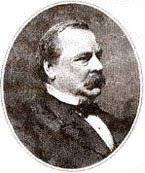
Grover Cleveland's greatness can  at least partially be measured by his enemies; Tugwell was the kind of enemy of which heroes are made.  Grover Cleveland summed up his own accomplishments as "blocking the bad ideas of others".  Today we could use a president like Grover Cleveland with the guts to stand up and boldly block the continuing stream of bad ideas that come from Washington, D.C.


Monday, January 19, 2009

The Bipartisan Road to Hell on Earth


"[T]he lesson should be constantly reinforced that though the people support the Government, Government should not support the people..."

~Grover Cleveland

I have only supported two candidates for president, both with equal chances of becoming president, Ron Paul and the ghost of Grover Cleveland. While above quote may be taken merely as an outmoded statement of political philosophy from another era, actually it is a simple statement of fact. Government has nothing and cannot make anything without first exacting the resources of the people through taxation, either outright or through monetary inflation. If we concede any legitimate functions of government, defense services essentially, then we concede that government will need revenue for the "careful and economical maintenance of the Government which protects..." Any government expenditures beyond what is necessary for its legitimate constitutional functions can only be financed by "indefensible extortion".

When one of the most delightfully apolitical persons I have ever had the pleasure of knowing proclaimed membership in Obama's "bandwagon of hope", it confirmed by belief that we are entering a new and foreboding era. Do not be mistaken, hope for the future is a necessary part of life. The problem with Obama's brand of hope is that is yet another iteration of hope in the government as a messiah that has brought so much death and destruction in the last century or so.

When Joseph Stalin died in 1953, it took until 1956 for Nikita Krushchev to make his de-Stalinization speech in which he coined the term, "cult of personality". For Krushchev couldn't simply blame the Soviet Union's problems on Stalin; the official USSR philosophy, dialectal materialism, decreed that the clash of impersonal "forces", the dialectic between capital and labor, determine history. In order to blame Stalin for their problems, Krushchev invented the concept of the personality cult which can derail temporarily the inexorable train of the dialectic.

The hard rock band of the 1980s, Living Color, in their song "Cult of Personality"expanded the idea of the cult of personality to include not only brutal dictators like Mussolini, Hitler, Stalin, and Mao but also FDR, John F. Kennedy and even Ghandi. Barack Obama is the latest personality cult. He is the emptiest suit, no mean feat in a polity which twice put George W. Bush into office, to ever be elected president. Obama edited the Harvard Law Review yet published only one anonymous article in it. He was a college lecturer for a decade without bothering to publish one academic article (in his defense it should noted that lecturers are often not on a "tenure track" which would require publishing) . He was a civil rights attorney but is the counsel of record on exactly zero cases. It seems that his glowing personality is all that he has needed to be "in demand".

We have lived through huge expansions of government power based the idea of government as our savior: We have had Woodrow Wilson, the academic, and his "progressive reforms", then Franklin D. Roosevelt, the patrician, and his "New Deal", Lyndon B. Johnson, the political arm-twister, and his "Great Society". Most recently we have been treated to George W. Bush's "compassionate conservatism" and his nonsensical "war on terror". To believe any of these misadventures could have succeeded in their stated goals required a suspension of one's ability to use common sense. One sign that common sense has flown out the window is when bipartisan political strife has been put on hold.

Rahm Emanuel recently touted the bipartisan nature of Obama's first legislative victory, albeit before even officially taking office:

"Even before president was elect--sworn into office, he got a major piece of legislation passed. He--and it was not popular. I mean, you would not call the play that we did out of the huddle, the first play, throw an 80-yard pass. Usually you do things that you build up your political support. He did it in two significant ways: made a decision, the legislation was passed with bipartisan support; and most importantly, not done with the type of rancor and political posturing that has been done over the years."

The word "bipartisan" is a cover word often used when politicians realize that the people have lost what little faith they ever had in them and they must deliver another short-sighted band-aid solution to some crisis that they created themselves. So now, "economists from across the political spectrum" favor Obama's massive, necessarily pork-laden, and economically and fiscally destructive $800 billion stimulus package.

We have been for a long time living out the truth of Grover Cleveland's wise words: "Once the coffers of the federal government are opened to the public, there will be no shutting them". Obama's stimulus package is only the latest and most grotesquely absurd exposition of this truth. So what of hope? Obama supporters can hope all they want. The simple fact of the matter is that Obama has not a clue how we got into the mess we are in and has no idea how to get us out of it. His attempted cures will be worse than the disease.

So keep drinking the Kool-Aid and believing that Barack Obama can make one and one equal three; we who still know better must continue to drink our coffee black and keep on in the spirit: Dum spiro, spero, while I breath, I hope.